
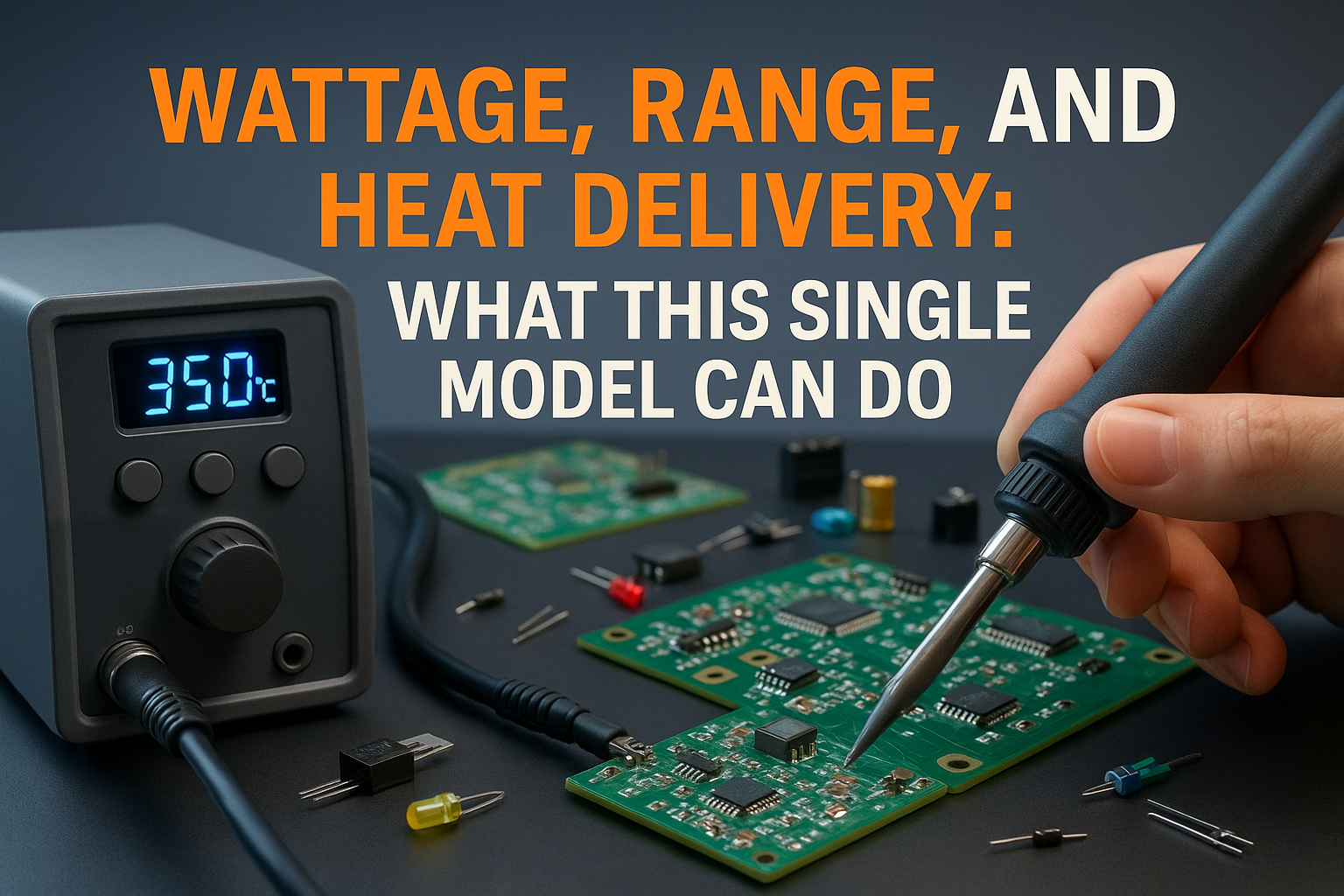
When I first examined the XYTRONIC soldering station’s specifications, I was struck by how much engineering precision was packed into one unit. The relationship between wattage, temperature range, and heat delivery isn’t just about numbers on a spec sheet—it’s about understanding how these three critical factors work together to create a tool that can handle everything from delicate SMD components to heavy-duty connector work.
Key Takeaways
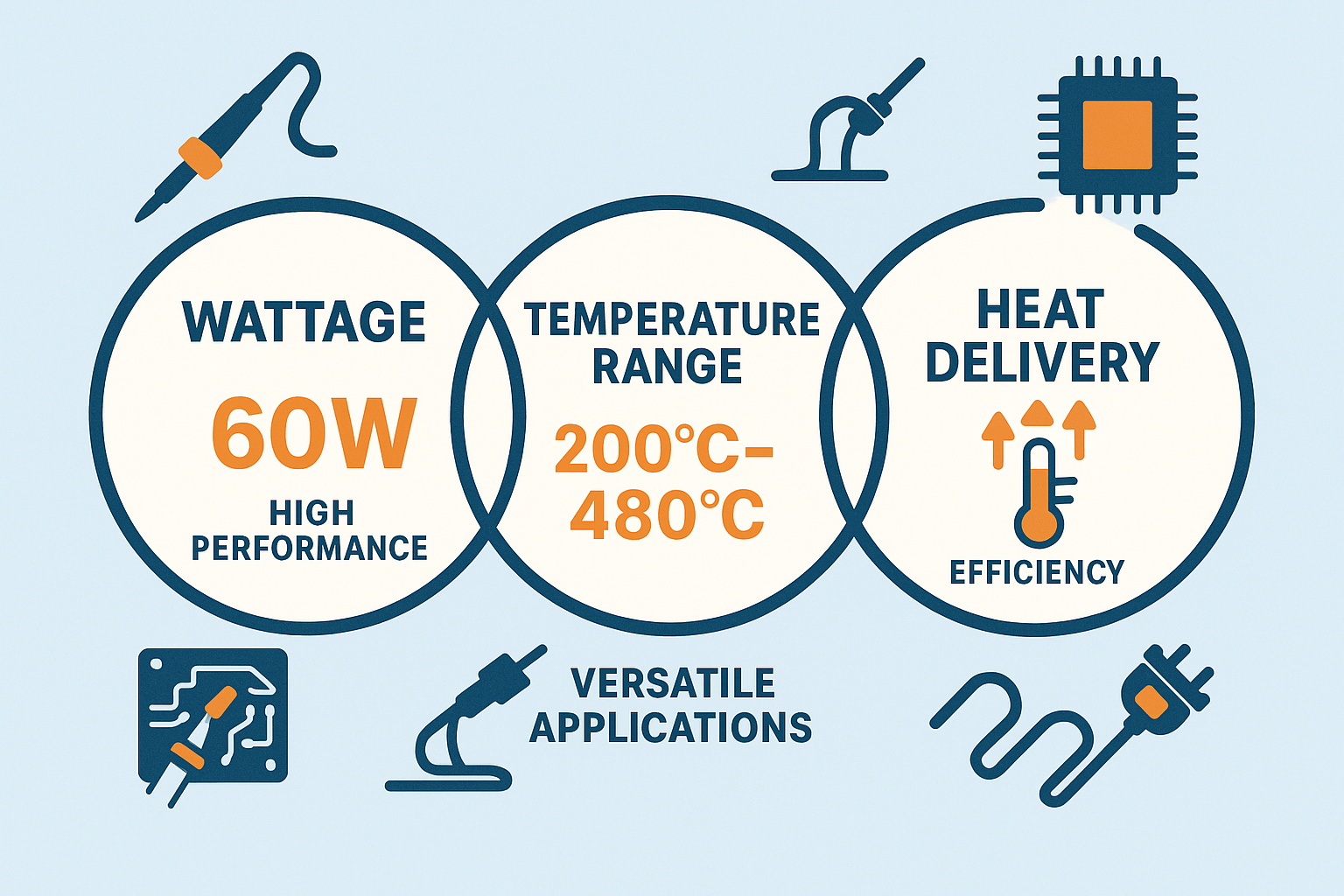
• Wattage determines recovery speed: Higher wattage means faster temperature recovery when heat is drawn away during soldering
• Temperature range flexibility: A wide operating range (200°C-480°C) allows for both lead-free and leaded solder applications
• Heat delivery efficiency: The combination of wattage and thermal design affects how quickly and consistently heat transfers to your work
• Single model versatility: One well-designed station can replace multiple specialized tools when specifications are properly balanced
• Performance optimization: Understanding these relationships helps you maximize efficiency and extend tip life
Understanding the Power Triangle: Wattage, Range, and Heat Delivery
The wattage, range, and heat delivery capabilities of a soldering station form what I call the “power triangle”—three interconnected specifications that determine the tool’s overall performance. Each element affects the others, and understanding these relationships is crucial for both electronics engineers and hobbyists.
Wattage: The Foundation of Performance
Wattage represents the electrical power consumption and, more importantly, the heating capacity of your soldering station. In the XYTRONIC model, the 60-watt rating isn’t just about power consumption—it’s about thermal recovery speed and heat delivery consistency.
Here’s what different wattage levels mean in practical terms:
| Wattage Range | Best Applications | Recovery Time | Thermal Mass Handling |
|—————|——————-|—————|———————-|
| 20-40W | SMD components, fine pitch work | Moderate | Light thermal loads |
| 50-70W | General electronics, mixed components | Fast | Medium to heavy loads |
| 80W+ | Heavy connectors, ground planes | Very fast | Heavy thermal loads |
The 60-watt capacity strikes an optimal balance, providing enough power for demanding applications while maintaining the precision needed for delicate work. This is particularly important when working with lead-free versus leaded solder, as lead-free alloys require higher temperatures and more consistent heat delivery.
Temperature Range: Versatility in Action
The temperature range of 200°C to 480°C represents more than just operational flexibility—it’s about application versatility and future-proofing your investment. This range covers:
Low Temperature Applications (200°C-280°C):
- Rework of temperature-sensitive components
- Working with low-melting-point alloys
- Precision work on flexible PCBs
Medium Temperature Range (280°C-350°C):
- Standard leaded solder applications
- Most through-hole component work
- General repair and assembly tasks
High Temperature Range (350°C-480°C):
- Lead-free solder applications
- Heavy ground plane connections
- Large connector assemblies
- Desoldering operations
This comprehensive range means that what this single model can do extends far beyond basic soldering. It becomes a versatile tool capable of handling diverse projects without requiring multiple specialized stations.
Heat Delivery: Where Engineering Meets Performance
Heat delivery is perhaps the most misunderstood aspect of soldering station performance. It’s not just about reaching temperature—it’s about maintaining temperature under load and transferring heat efficiently to your work.
Thermal Recovery Speed
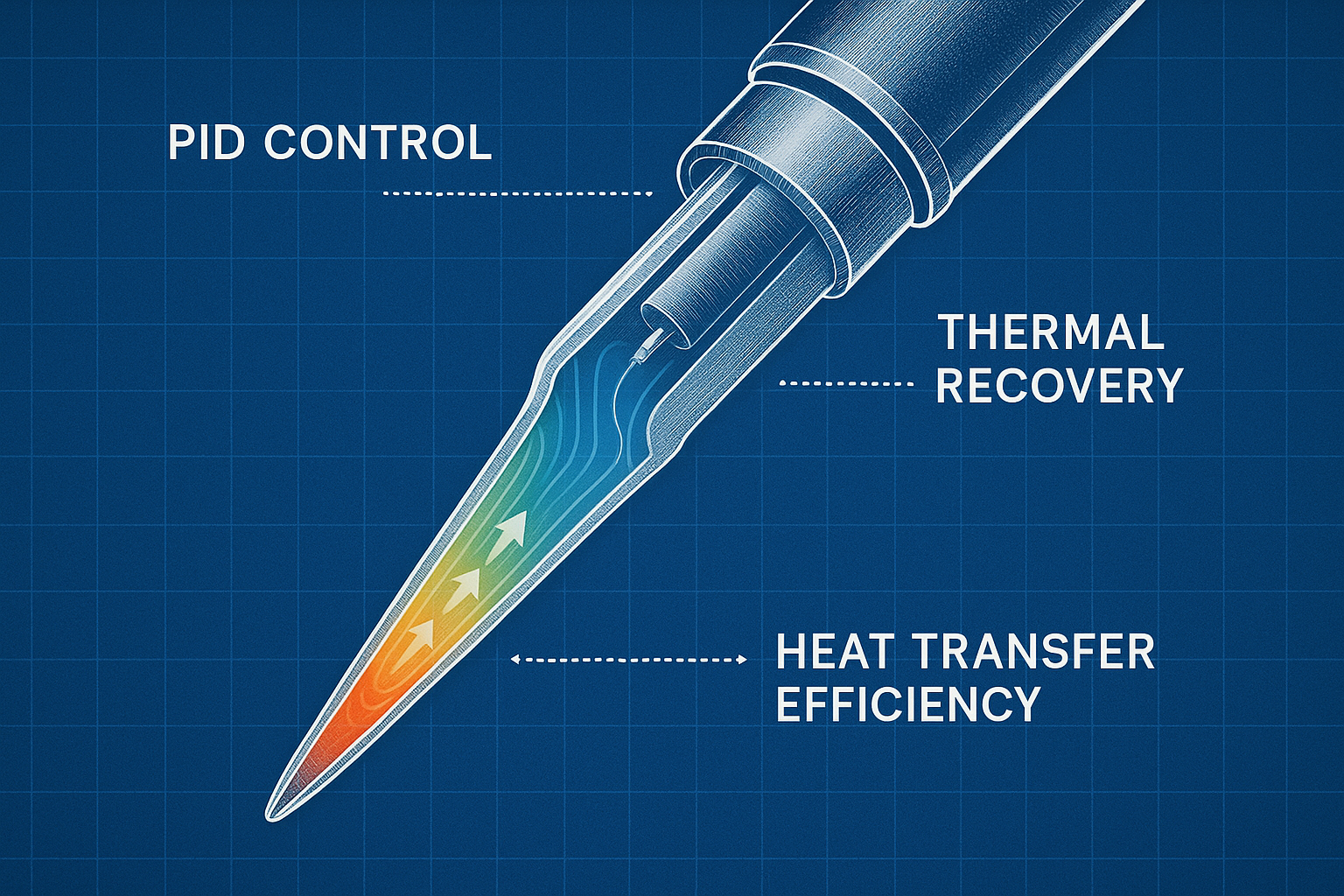
When you touch a hot soldering tip to a cold joint, heat flows rapidly from the tip to the work. The station’s ability to sense this temperature drop and quickly restore the set temperature is called thermal recovery. The XYTRONIC station’s rapid heat-up and recovery capabilities demonstrate how proper engineering can optimize this critical performance factor.
Heat Transfer Efficiency
The efficiency of heat transfer depends on several factors:
🔥 Tip design and material
🔥 Contact area with the work
🔥 Thermal conductivity of the heating element
🔥 Temperature control algorithm responsiveness
The XYTRONIC station’s design optimizes each of these factors, resulting in consistent heat delivery even during demanding applications.
Real-World Performance Analysis
To truly understand what this single model can do, let’s examine performance across different application scenarios:
Scenario 1: SMD Rework (0.5mm pitch QFP)
- Required temperature: 280°C
- Thermal demand: Low to moderate
- Critical factors: Precision, temperature stability
- Performance: Excellent control, minimal overshoot
Scenario 2: Through-Hole Assembly (Large Capacitors)
- Required temperature: 320°C
- Thermal demand: Moderate to high
- Critical factors: Recovery speed, sustained heat
- Performance: Fast recovery, consistent temperature
Scenario 3: Connector Soldering (Heavy Gauge Wire)
- Required temperature: 380°C
- Thermal demand: High
- Critical factors: Maximum heat delivery, tip longevity
- Performance: Adequate power reserve, good thermal management
The Science Behind Optimal Performance
Understanding why temperature control matters helps explain how the XYTRONIC station achieves its impressive wattage, range, and heat delivery performance.
PID Control Algorithm
The station uses a Proportional-Integral-Derivative (PID) control system that:
- Proportional: Responds to current temperature error
- Integral: Corrects for accumulated error over time
- Derivative: Anticipates future error based on rate of change
This sophisticated control system ensures that the heat delivery remains consistent regardless of thermal load variations.
Thermal Sensor Integration
The integrated thermal sensor provides real-time feedback with response times measured in milliseconds. This rapid feedback loop enables:
✅ Precise temperature maintenance
✅ Quick recovery from thermal shock
✅ Protection against overheating
✅ Consistent performance across the temperature range
Maximizing Performance Through Proper Setup
To fully utilize what this single model can do, proper setup and maintenance are essential. Here are key considerations:
Tip Selection and Maintenance
Choosing the right tips significantly impacts heat delivery efficiency. Different tip geometries and sizes affect:
- Heat transfer rate
- Temperature distribution
- Thermal mass
- Contact area optimization
ESD Considerations
When working with sensitive components, ESD safety becomes crucial. The XYTRONIC station’s ESD protection doesn’t compromise its heat delivery performance, maintaining both safety and efficiency.
Ergonomic Factors
Ergonomic design affects your ability to maintain consistent contact and heat transfer. Poor ergonomics can lead to:
- Inconsistent joint quality
- Increased fatigue
- Reduced precision
- Longer task completion times
Energy Efficiency and Longevity
The wattage, range, and heat delivery specifications also impact long-term operational costs and component longevity.
Auto-Sleep and Auto-Shutoff Features
The station’s auto-sleep and auto-shutoff capabilities help maximize tip life while reducing energy consumption. These features:
- Reduce oxidation during idle periods
- Extend tip lifespan by minimizing thermal stress
- Save energy through intelligent power management
- Enhance safety in busy work environments
Cost-Benefit Analysis
When evaluating what this single model can do from an economic perspective, consider:
| Factor | Single High-Performance Station | Multiple Specialized Tools |
|——–|——————————–|—————————|
| Initial investment | Moderate | High |
| Workspace requirements | Minimal | Extensive |
| Training time | Short | Extended |
| Maintenance complexity | Low | High |
| Versatility | Excellent | Limited per tool |
Advanced Applications and Capabilities
The comprehensive wattage, range, and heat delivery specifications enable advanced applications that might typically require specialized equipment:
Mixed Technology Boards
Modern electronics often combine various component types requiring different thermal approaches. The XYTRONIC station handles:
- SMD components with precise low-temperature control
- Through-hole components with adequate thermal mass
- Mixed assemblies without tool changes
- Rework operations across component types
Production Environment Suitability
While designed for engineering and hobbyist use, the station’s specifications make it suitable for small-scale production:
🏭 Consistent performance across extended sessions
🏭 Reliable temperature control for quality assurance
🏭 Fast task completion due to efficient heat delivery
🏭 Minimal downtime from robust design
Troubleshooting Common Performance Issues
Understanding the relationship between wattage, range, and heat delivery helps diagnose and resolve common issues:
Slow Heating Problems
If the station seems slow to reach temperature:
- Check tip condition and cleanliness
- Verify proper tip seating
- Ensure adequate ventilation around the unit
- Consider if ambient temperature is affecting performance
Temperature Overshoot
Excessive temperature overshoot may indicate:
- Incorrect tip selection for the application
- Calibration drift requiring adjustment
- Thermal sensor issues
- Control algorithm problems
Inconsistent Heat Delivery
Variable heat delivery often results from:
- Oxidized or contaminated tips
- Poor tip-to-work contact
- Inadequate flux application
- Thermal mass mismatches
Future-Proofing Your Investment
The wattage, range, and heat delivery capabilities of this single model provide excellent future-proofing for evolving electronics work:
Emerging Technologies
As electronics continue to evolve, the station’s specifications support:
- Higher density assemblies requiring precise control
- New solder alloys with different thermal requirements
- Advanced materials needing specific temperature profiles
- Miniaturized components demanding exceptional precision
Skill Development
The comprehensive capabilities support skill development across:
- Basic soldering techniques for beginners
- Advanced rework procedures for professionals
- Specialized applications for specific industries
- Experimental projects for innovation
💡 Pro Tip: The key to maximizing what this single model can do is understanding that wattage, range, and heat delivery work together as a system. Optimizing one parameter while ignoring the others will limit overall performance.
Making the Investment Decision
When considering whether this single model meets your needs, evaluate how its wattage, range, and heat delivery specifications align with your requirements:
For Electronics Engineers
Professional engineers benefit from:
- Comprehensive temperature range for diverse projects
- Consistent heat delivery for reliable results
- Adequate wattage for demanding applications
- Professional-grade control for quality work
For Hobbyists
Hobbyist users appreciate:
- Versatility eliminating need for multiple tools
- Growth capability supporting skill development
- Reliable performance for consistent results
- Value proposition of comprehensive capabilities
Ready to experience superior soldering performance? Shop XYTRONIC soldering station today and discover what precision engineering can do for your projects.
Conclusion
The wattage, range, and heat delivery capabilities of the XYTRONIC soldering station demonstrate how thoughtful engineering can create a tool that truly excels across diverse applications. With 60 watts of power, a 200°C-480°C temperature range, and optimized heat delivery systems, this single model eliminates the need for multiple specialized tools while providing professional-grade performance.
Understanding these specifications helps you make informed decisions about tool selection and optimal usage techniques. Whether you’re an electronics engineer working on complex assemblies or a hobbyist exploring new projects, the comprehensive capabilities of this station provide the foundation for excellent results.
The integration of advanced control systems, ergonomic design, and safety features creates a tool that not only performs well today but adapts to future challenges. By investing in a station with properly balanced wattage, range, and heat delivery specifications, you’re choosing a tool that will grow with your skills and meet evolving project demands.
Take the time to explore the full capabilities of your soldering station. Experiment with different temperature settings, understand how thermal loads affect performance, and develop techniques that maximize the efficient heat delivery. The investment in understanding these relationships will pay dividends in improved work quality, faster task completion, and greater project success.