
Have you ever wondered why your soldering joints look inconsistent despite using a high-quality XYTRONIC station? The secret often lies in one critical component that many engineers overlook: the soldering tip. After working with countless electronics projects over the years, I’ve discovered that mastering the XYTRONIC Station tips selection can transform your soldering from frustrating guesswork into precise, professional craftsmanship.
Whether you’re designing intricate PCBs or repairing delicate components, choosing the right tip for your XYTRONIC station isn’t just about convenience—it’s about achieving reliable, repeatable results that meet industry standards. In this comprehensive guide, I’ll walk you through everything you need to know to make informed decisions about tip selection, maintenance, and optimization for your specific applications.
Key Takeaways
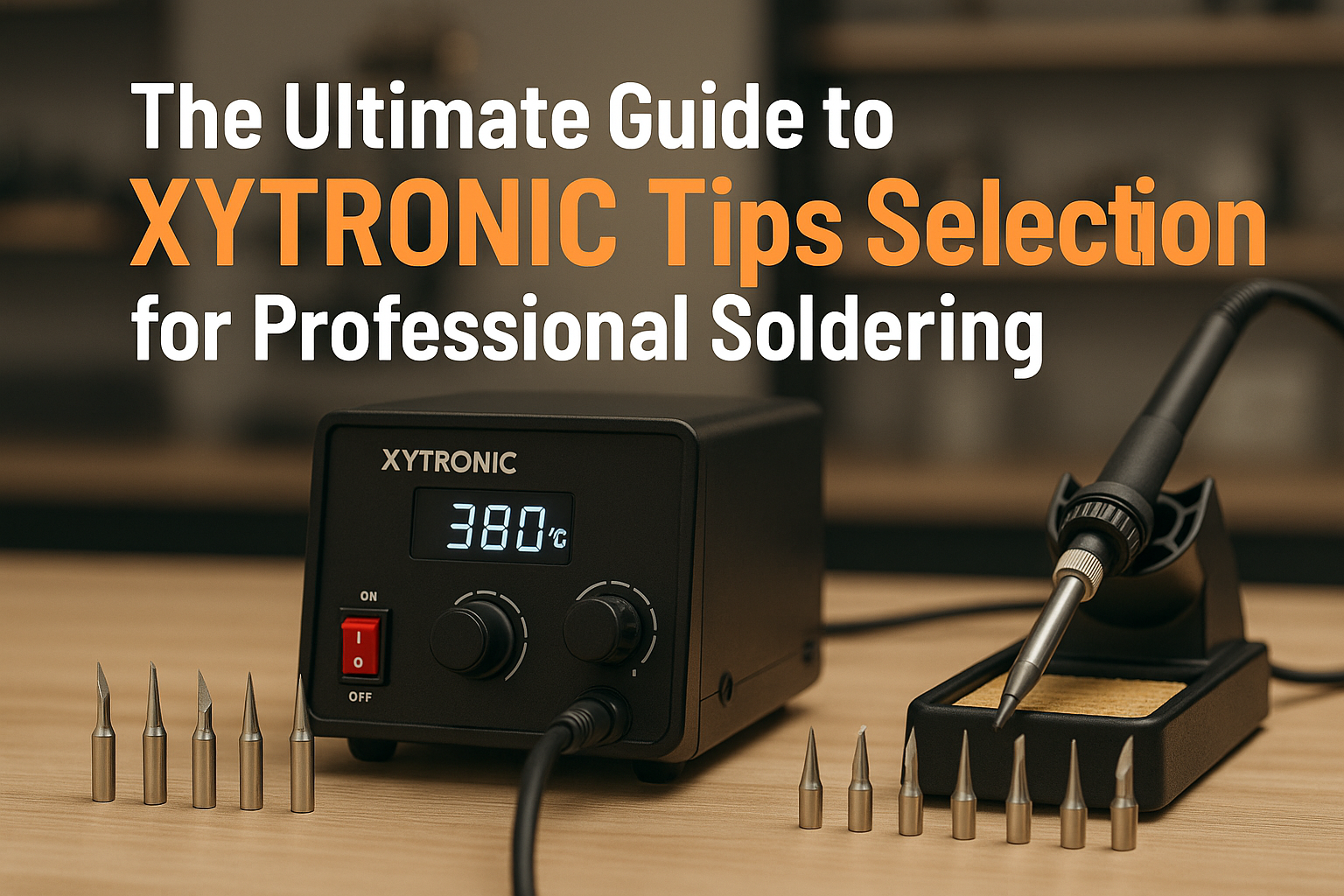
• Tip geometry directly impacts heat transfer efficiency – chisel tips for general work, conical tips for precision, and knife tips for drag soldering
• Temperature compatibility matters – match your tip’s thermal characteristics to your XYTRONIC station’s capabilities for optimal performance
• Size selection follows the 1/3 rule – your tip should be approximately one-third the size of the component pad for best results
• Proper maintenance extends tip life significantly – regular cleaning and tinning can increase lifespan by 300-400%
• Application-specific tips improve quality – specialized tips for SMD, through-hole, and desoldering tasks deliver superior results
Understanding XYTRONIC Station Tip Fundamentals
What Makes XYTRONIC Tips Different? 🔧
XYTRONIC has built a reputation for engineering soldering tips that balance thermal efficiency with durability. Unlike generic alternatives, XYTRONIC tips feature proprietary heating elements and specialized coatings that ensure consistent temperature distribution across the tip surface.
The key differentiator lies in their thermal recovery time—the speed at which a tip returns to set temperature after making contact with a component. XYTRONIC tips typically recover within 2-3 seconds, compared to 5-8 seconds for standard tips. This rapid recovery prevents cold solder joints and reduces the risk of component damage from prolonged heat exposure.
Core Components of XYTRONIC Tips
Every XYTRONIC tip consists of three essential elements:
- Copper Core – Provides excellent thermal conductivity
- Iron Plating – Creates a wettable surface for solder adhesion
- Protective Coating – Prevents oxidation and extends tip life
Understanding these components helps explain why proper care and maintenance are crucial for optimal performance.
Essential Factors in the XYTRONIC Station Tips Selection Process
Temperature Requirements and Thermal Mass
The foundation of effective tip selection starts with understanding your thermal requirements. Different soldering applications demand varying heat levels, and your tip choice directly impacts thermal transfer efficiency.
For lead-free soldering (requiring 240-260°C), you’ll need tips with robust thermal mass to maintain consistent temperatures. Conversely, temperature-sensitive components benefit from smaller tips that provide precise heat control without overwhelming delicate circuits.
| Component Type | Recommended Temperature | Ideal Tip Size |
|—————-|————————|—————-|
| SMD Resistors (0603) | 240-250°C | 1.6mm or smaller |
| Through-hole ICs | 260-280°C | 2.4-3.2mm |
| Large Connectors | 300-320°C | 4.8mm or larger |
| Heat-sensitive LEDs | 220-240°C | 1.2mm conical |
Tip Geometry and Shape Selection
The geometry of your tip determines how effectively you can access components and transfer heat. I’ve found that having the right shape for each task dramatically improves both speed and quality.
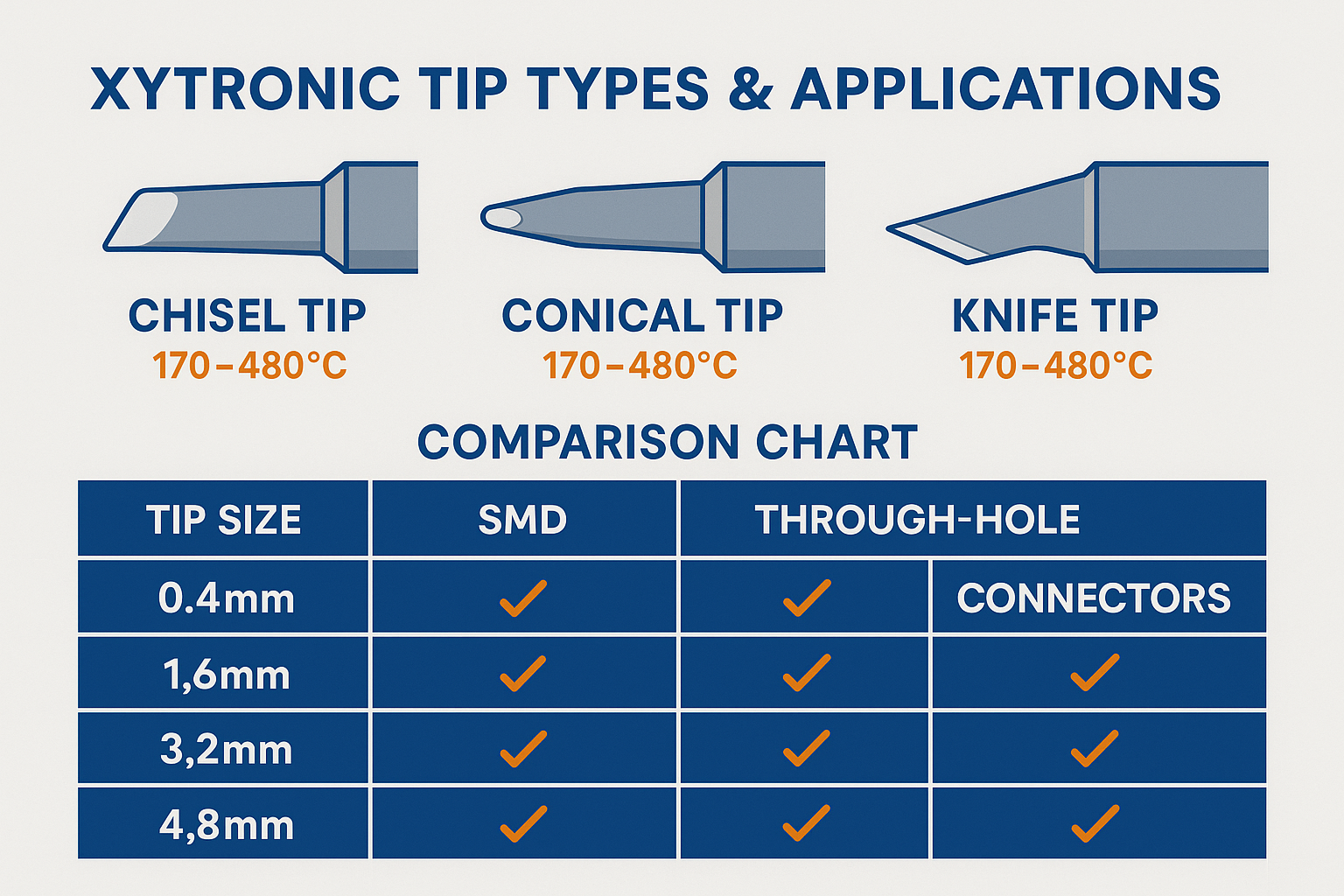
Chisel Tips excel at general-purpose work, offering excellent heat transfer for through-hole components and larger SMD devices. Their flat surface provides maximum contact area, making them ideal for drag soldering techniques.
Conical Tips provide precision for fine-pitch work and tight spaces. The pointed geometry allows accurate placement while minimizing heat spread to adjacent components—crucial when working with densely packed PCBs.
Knife Tips serve specialized applications like drag soldering TQFP packages and removing components. Their blade-like shape distributes heat along multiple pins simultaneously.
Size Considerations for Optimal Performance
Selecting the appropriate tip size follows engineering principles rather than guesswork. The 1/3 rule provides an excellent starting point: choose a tip width approximately one-third the size of your component pad.
This ratio ensures adequate heat transfer without overwhelming smaller components or providing insufficient thermal mass for larger joints. For precision work on components smaller than 0.5mm, consider tips with 0.4-0.8mm dimensions. Medium applications (1-3mm pads) work best with 1.6-2.4mm tips, while larger components benefit from 3.2mm or larger tips.
XYTRONIC Tip Types and Their Applications
Standard Chisel Tips for General Purpose Work
Chisel tips represent the workhorses of most electronics workshops. Their flat, screwdriver-like profile provides excellent thermal contact and versatility across numerous applications.
I recommend starting with a 2.4mm chisel tip for general electronics work. This size handles most through-hole components, small connectors, and medium SMD devices effectively. The flat surface allows for efficient heat transfer while maintaining enough precision for detailed work.
For larger applications like power electronics or connector soldering, consider 3.2mm or 4.8mm chisel tips. These provide the thermal mass needed for joints requiring sustained heat input.
Precision Conical Tips for Fine Work
When working with fine-pitch components or performing detailed rework, conical tips become indispensable. Their pointed geometry allows access to cramped spaces while providing controlled heat application.
The 0.8mm conical tip serves as an excellent starting point for SMD work on components like 0603 resistors and small ICs. For even finer work—such as 0402 components or micro-connectors—consider 0.4mm or 0.6mm variants.
One crucial consideration with conical tips: their smaller thermal mass means faster temperature fluctuations. Ensure your XYTRONIC station provides stable temperature control to maintain consistent performance.
Specialized Tips for Advanced Applications
XYTRONIC offers several specialized tip designs for specific applications:
Knife Tips excel at drag soldering TQFP and SOIC packages. Their blade-like profile allows simultaneous heating of multiple pins, significantly speeding up assembly processes.
Bevel Tips provide angled access for components in tight spaces or when working around tall components that obstruct straight-on access.
Hollow Tips facilitate desoldering operations by creating a vacuum chamber around component leads, making removal cleaner and more efficient.
Matching Tips to Your Specific Applications
SMD Component Soldering
Surface-mount device (SMD) soldering demands precision and thermal control. The compact nature of SMD components requires tips that provide adequate heat without affecting adjacent parts.
For 0603 and 0805 resistors/capacitors, I recommend 1.6mm chisel tips or 0.8mm conical tips. These sizes provide sufficient thermal mass while allowing precise placement. When working with fine-pitch ICs (0.5mm pitch or smaller), switch to 0.4-0.6mm conical tips for maximum control.
BGA rework requires specialized approach. Use larger chisel tips (3.2-4.8mm) for preheating areas around the component, then switch to precision tips for detailed work on individual balls.
Through-Hole Component Work
Through-hole soldering typically allows more flexibility in tip selection due to larger component sizes and greater thermal mass. Standard 2.4mm chisel tips handle most applications effectively.
For large capacitors or power components, upgrade to 3.2mm or larger tips to ensure adequate heat transfer. The increased thermal mass prevents extended heating times that could damage components or PCB substrates.
Wire connections and connector soldering often benefit from knife tips, which can heat multiple connection points simultaneously while providing access to cramped spaces.
Desoldering and Rework Operations
Desoldering presents unique challenges requiring specialized tip selection. The goal is removing components cleanly without damaging PCB pads or traces.
Hollow tips designed specifically for desoldering provide the most effective approach. These tips surround component leads, applying heat while creating suction to remove molten solder. Sizes typically range from 1.0mm to 3.0mm depending on component lead diameter.
For rework operations involving component replacement, start with precision tips for removal, then switch to appropriate sizes for installation. This two-stage approach ensures clean removal and reliable installation.
Temperature and Power Considerations
Understanding Thermal Requirements
Effective the XYTRONIC Station tips selection requires understanding the thermal dynamics of your specific applications. Different materials and component sizes demand varying heat input to achieve proper solder flow and joint formation.
Lead-free solders require higher temperatures (typically 240-260°C) compared to traditional lead-based solders (180-200°C). This temperature difference affects tip selection—you’ll need tips with greater thermal mass to maintain stable temperatures when working with lead-free materials.
Component thermal sensitivity also influences tip choice. Heat-sensitive components like certain ICs, LEDs, and plastic connectors require careful temperature control. Smaller tips provide more precise heat application, reducing the risk of thermal damage.
Power Rating and Station Compatibility
Your XYTRONIC station’s power rating directly impacts tip performance. Higher wattage stations can drive larger tips effectively, while lower-power units work best with smaller, more efficient tips.
Most XYTRONIC stations range from 25W to 90W. For precision work with small tips, 25-40W provides adequate power. Medium applications benefit from 40-60W stations, while heavy-duty work requires 60W or higher.
Tip compatibility extends beyond physical fit. Ensure your chosen tips match your station’s electrical characteristics for optimal temperature control and longevity.
Maintenance and Care for Optimal Performance
Daily Maintenance Routines
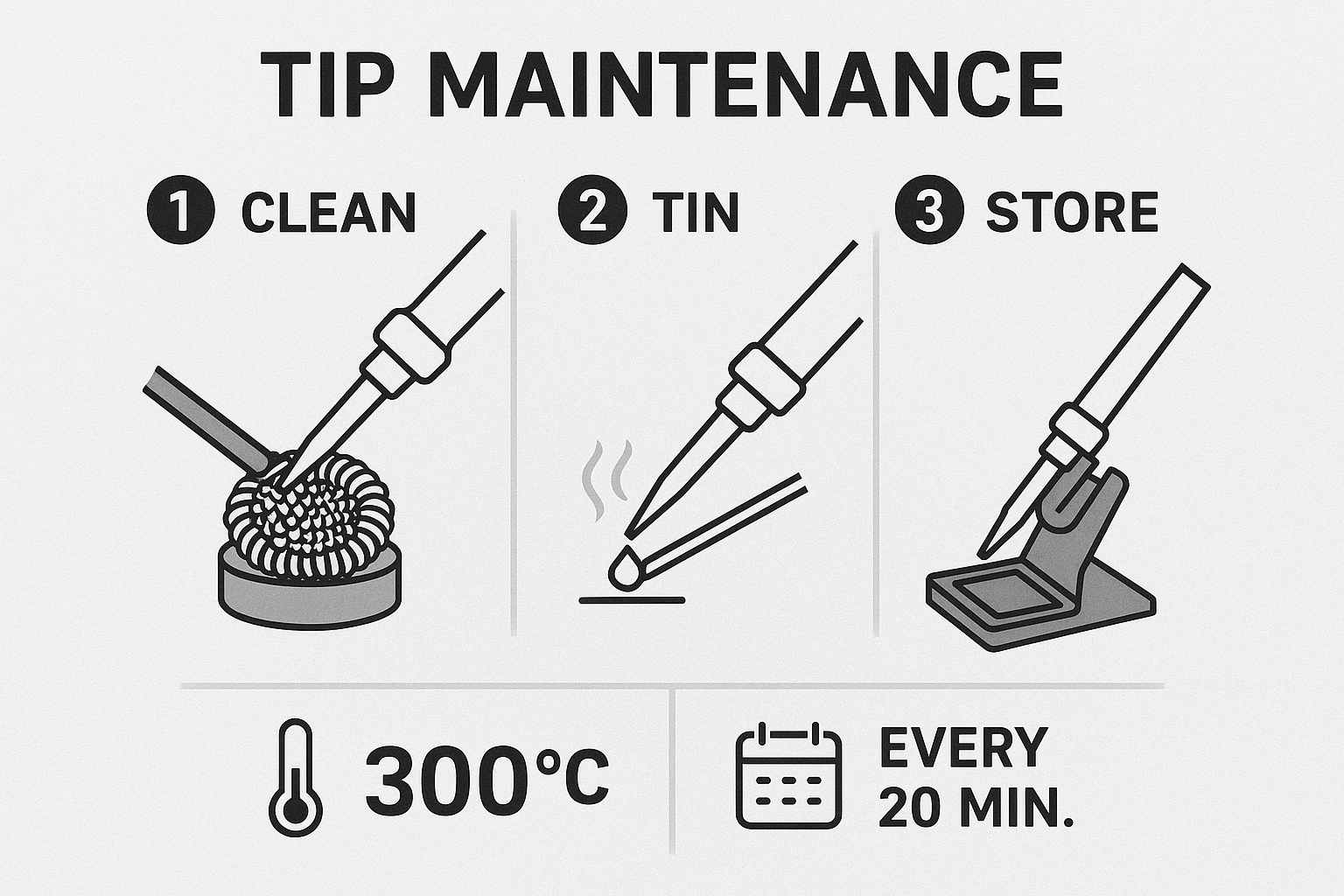
Proper tip maintenance can extend lifespan by 300-400% while maintaining consistent performance. I’ve developed a simple daily routine that takes less than five minutes but dramatically improves tip longevity.
Pre-work preparation starts with cleaning the tip using a damp sponge or brass brush to remove oxidation and residue. Apply fresh solder to create a protective coating—this process, called “tinning,” prevents oxidation during use.
During work, clean the tip regularly (every 10-15 joints) to prevent flux buildup and maintain good thermal contact. Use gentle pressure with brass brushes to avoid damaging the iron plating.
Post-work care involves thorough cleaning followed by a generous coating of fresh solder. This protective layer prevents oxidation during storage and ensures your tip is ready for immediate use next session.
Long-term Care and Storage
Long-term storage requires additional considerations. For periods longer than a week, clean tips thoroughly and apply a thick solder coating. Store in a dry environment to prevent moisture-related corrosion.
Temperature cycling affects tip longevity. Avoid rapid temperature changes by allowing gradual warm-up and cool-down periods. This practice reduces thermal stress and prevents premature failure.
Replacement indicators include persistent oxidation that cleaning cannot remove, pitting or erosion of the tip surface, and inability to maintain proper tinning. These signs indicate it’s time for replacement to maintain work quality.
Troubleshooting Common Tip Selection Issues
Poor Heat Transfer Problems
Inadequate heat transfer often stems from incorrect tip sizing rather than station problems. If joints appear cold or require excessive heating time, consider upgrading to a larger tip with greater thermal mass.
Oxidation buildup creates an insulating layer that impedes heat transfer. Regular cleaning and proper tinning prevent this issue. If oxidation persists, examine your flux choice—some fluxes are more corrosive and require more frequent cleaning.
Thermal cycling issues can indicate mismatched tip and station power ratings. Ensure your station provides adequate wattage for your chosen tip size.
Component Damage Issues
Overheating components typically results from excessive tip size or temperature. Switch to smaller tips for better thermal control, and verify your temperature settings match component requirements.
Pad lifting often occurs when heat application is too broad or prolonged. Precision tips provide better control for sensitive PCB work.
Flux spattering can damage nearby components. This usually indicates excessive temperature or contaminated tips. Clean tips regularly and verify temperature calibration.
Inconsistent Results
Variable joint quality often traces back to inconsistent tip maintenance or inappropriate tip selection for specific tasks. Develop standardized procedures for different component types.
Temperature fluctuations may indicate tip degradation or poor thermal contact. Inspect tips regularly and replace when performance degrades.
Access difficulties in tight spaces require specialized tip geometries. Don’t force inappropriate tips into cramped areas—invest in proper angled or knife tips for better access.
Advanced Tips and Techniques
Professional Soldering Workflows
Developing systematic workflows improves both efficiency and quality. I organize my work by grouping similar components and using appropriate tips for each group rather than constantly switching.
Tip preheating ensures optimal performance from the first joint. Allow 2-3 minutes for thermal stabilization before beginning work, especially with larger tips that have greater thermal mass.
Component sequencing affects tip selection strategy. Start with heat-sensitive components using precision tips, then progress to larger components with appropriately sized tips. This approach minimizes thermal stress on completed joints.
Quality Control and Testing
Joint inspection becomes more systematic with proper tip selection. Consistent tip choice for similar components produces predictable results, making quality assessment more reliable.
Thermal profiling helps optimize tip selection for specific applications. Use thermal measurement tools to verify that your tip choices provide appropriate heating rates and thermal distribution.
Documentation of successful tip/application combinations builds institutional knowledge. Record which tips work best for specific components and applications to improve future project efficiency.
For those serious about advancing their soldering skills, I recommend exploring our comprehensive beginners guide to soldering safety and ESD basics to ensure your workspace meets professional standards.
Cost-Effectiveness and ROI Analysis
Initial Investment Considerations
Building a comprehensive tip collection requires strategic planning to balance capability with budget constraints. Rather than purchasing every available tip, focus on core sizes that cover 80% of your applications.
Starter kit recommendations include:
- 2.4mm chisel tip (general purpose)
- 1.6mm chisel tip (medium precision)
- 0.8mm conical tip (fine work)
- 3.2mm chisel tip (larger components)
This four-tip foundation handles most electronics applications while keeping initial costs reasonable.
Specialized tips should be added based on specific project requirements. Calculate the time savings and quality improvements to justify specialized tip purchases.
Long-term Value Proposition
Quality tips like XYTRONIC’s may cost more initially but provide superior value through extended lifespan and consistent performance. Generic tips often require replacement 2-3 times more frequently.
Productivity gains from proper tip selection can be substantial. Using appropriate tips reduces rework, speeds assembly, and improves first-pass yields. These improvements often justify premium tip costs within weeks.
Professional reputation benefits from consistent, high-quality work enabled by proper tool selection. This intangible value often exceeds direct cost savings.
Ready to upgrade your soldering setup? Shop XYTRONIC soldering stations to find the perfect match for your professional needs, with competitive pricing and in-stock availability.
Future Trends in Soldering Tip Technology
Emerging Technologies
Smart tips with integrated temperature sensors represent the next evolution in soldering technology. These advanced tips provide real-time thermal feedback, enabling more precise temperature control and automated optimization.
Nano-coatings are improving tip longevity and performance. New surface treatments reduce oxidation rates and improve solder wetting characteristics, extending tip life while enhancing joint quality.
Modular tip systems allow quick changes between different geometries without cooling down. This technology reduces setup time and enables more efficient workflow management.
Industry Applications
Miniaturization trends in electronics drive demand for increasingly precise tips. Components continue shrinking, requiring tips with better thermal control and smaller geometries.
Lead-free mandates influence tip design toward better thermal performance at higher temperatures. Modern tips must handle the increased thermal demands while maintaining precision and longevity.
Automation integration creates demand for tips optimized for robotic soldering systems. These applications require consistent performance and extended operational life.
Conclusion
Mastering the XYTRONIC Station tips selection transforms your soldering from trial-and-error to predictable, professional results. The key lies in understanding the relationship between tip geometry, thermal requirements, and specific applications.
Start with a core collection of versatile tips, then expand based on your specific needs. Remember that proper maintenance extends tip life dramatically while ensuring consistent performance. Regular cleaning, appropriate tinning, and careful storage protect your investment while maintaining quality standards.
The time invested in learning proper tip selection pays dividends through improved work quality, reduced rework, and enhanced productivity. Whether you’re assembling prototypes or performing precision rework, the right tip makes the difference between acceptable and exceptional results.
Take action today by evaluating your current tip collection against your typical applications. Identify gaps where specialized tips could improve your work quality or efficiency. Consider the long-term value of investing in quality tips that provide consistent performance and extended life.
For more insights and detailed guides on soldering techniques and equipment selection, visit our comprehensive blog where we regularly share expert tips and industry best practices.
Your soldering success starts with the right tools—and that begins with selecting the perfect tip for each application. Make informed choices, maintain your equipment properly, and watch your soldering skills reach new levels of precision and reliability.