
Picture this: You’re deep into a delicate circuit board repair when suddenly, a tiny spark jumps from your finger to the component. In that split second, you’ve just delivered thousands of volts to a sensitive microchip that can only handle a few volts. This scenario happens more often than you’d think, and it’s exactly why ESD safety on XYTRONIC stations isn’t just a recommendation—it’s absolutely critical for anyone serious about electronics work.
Electrostatic discharge (ESD) is the silent killer of electronic components, causing billions of dollars in damage annually across the electronics industry. Whether you’re a seasoned electronics engineer or an enthusiastic hobbyist, understanding how to work safely with your XYTRONIC station can mean the difference between successful projects and costly component failures.
Key Takeaways
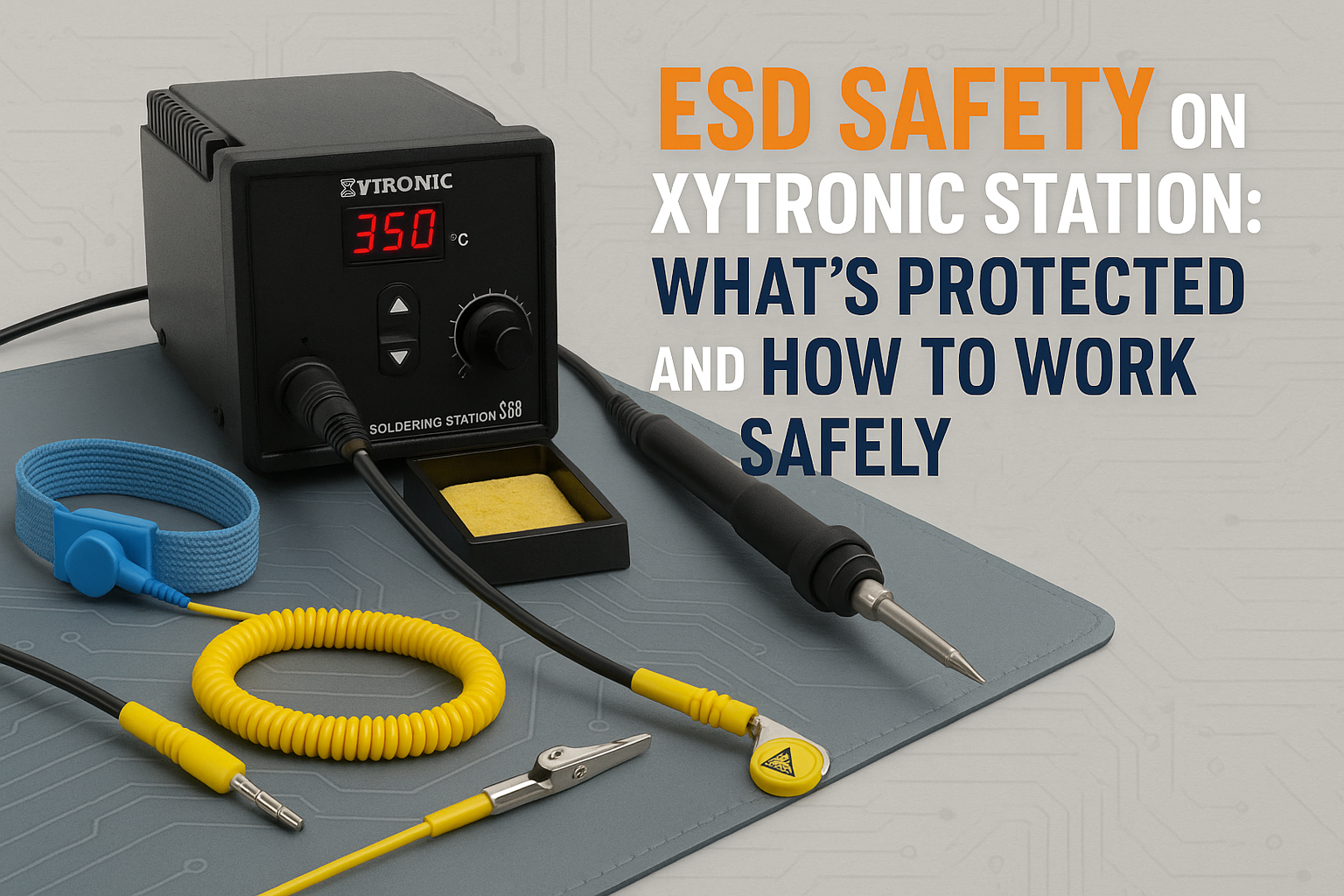
• XYTRONIC stations provide built-in ESD protection through grounded tips and chassis, but proper grounding techniques are essential
• Human body voltage can reach 35,000 volts during normal activities, while sensitive components can be damaged by as little as 10 volts
• Proper ESD safety requires a complete system approach including wrist straps, anti-static mats, and proper workspace setup
• Regular testing and maintenance of ESD protection equipment ensures ongoing safety and component protection
• Understanding what’s protected and what isn’t helps you implement additional safety measures where needed
Understanding ESD and Its Impact on Electronics
What Is Electrostatic Discharge? ⚡
Electrostatic discharge occurs when accumulated static electricity transfers between objects with different electrical potentials. In electronics work, this typically happens when a charged human body touches sensitive components or circuit boards.
The scary reality? You can generate enough static electricity to damage components without even feeling it. While you might not notice a discharge under 3,000 volts, many modern semiconductors can be permanently damaged by ESD events as low as 10-100 volts.
Common ESD Damage Scenarios
Immediate Failure: Component stops working entirely
Latent Damage: Component appears to work but fails prematurely
Parameter Degradation: Component operates outside specifications
Intermittent Failures: Unpredictable behavior that’s hard to diagnose
XYTRONIC Station ESD Protection Features
Built-in Protection Systems 🛡️
XYTRONIC soldering stations come equipped with several ESD protection features that set them apart from basic soldering irons. Understanding these features helps you maximize their effectiveness.
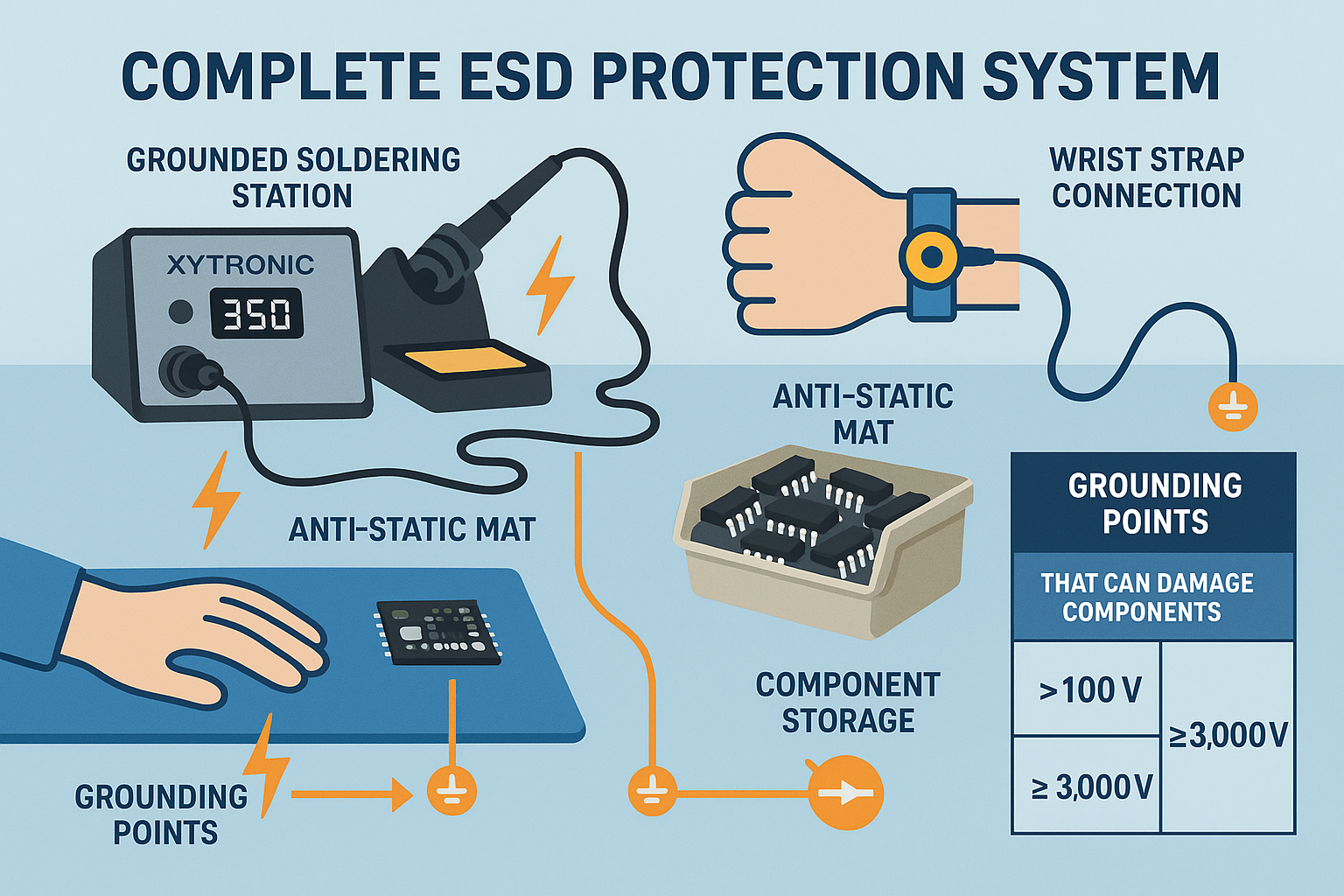
Grounded Soldering Tips: All XYTRONIC stations feature grounded tips that provide a direct path to earth ground, preventing static buildup on the iron itself.
Chassis Grounding: The station’s metal chassis connects to earth ground through the power cord, creating a stable reference point for ESD protection.
Isolated Heating Elements: The heating element design prevents electrical interference while maintaining proper grounding paths.
What’s Actually Protected
When you meet the XYTRONIC station and understand what it does, you’ll discover that the protection extends beyond just the tip:
- Soldering iron tip and shaft
- Connected circuit boards (when iron is in contact)
- Station electronics (through internal grounding)
- Work surface (when using grounded anti-static mats)
What’s NOT Protected
It’s crucial to understand the limitations:
- Your body (requires separate grounding)
- Components before soldering contact
- Tools and test equipment (need individual grounding)
- Storage containers and packaging
Essential ESD Safety Equipment and Setup
The Complete ESD Workstation 🔧
Creating a proper ESD-safe environment requires more than just a grounded soldering station. Here’s what you need:
| Equipment | Purpose | Resistance Range |
|———–|———|——————|
| Wrist Strap | Ground human body | 1-10 MΩ |
| Anti-static Mat | Ground work surface | 10⁶-10⁹ Ω |
| ESD Bags | Component storage | 10⁶-10¹¹ Ω |
| Ionizing Fan | Neutralize air charges | N/A |
Proper Grounding Techniques
Wrist Strap Connection: Always connect your wrist strap to the same ground point as your XYTRONIC station. This ensures you and your tools are at the same electrical potential.
Mat Grounding: Your anti-static mat should connect to the common ground point, creating a unified ESD-protected zone.
Common Ground Point: Use a proper ESD grounding block that connects to building earth ground through a dedicated outlet.
Step-by-Step Safe Working Procedures
Before You Begin 📋
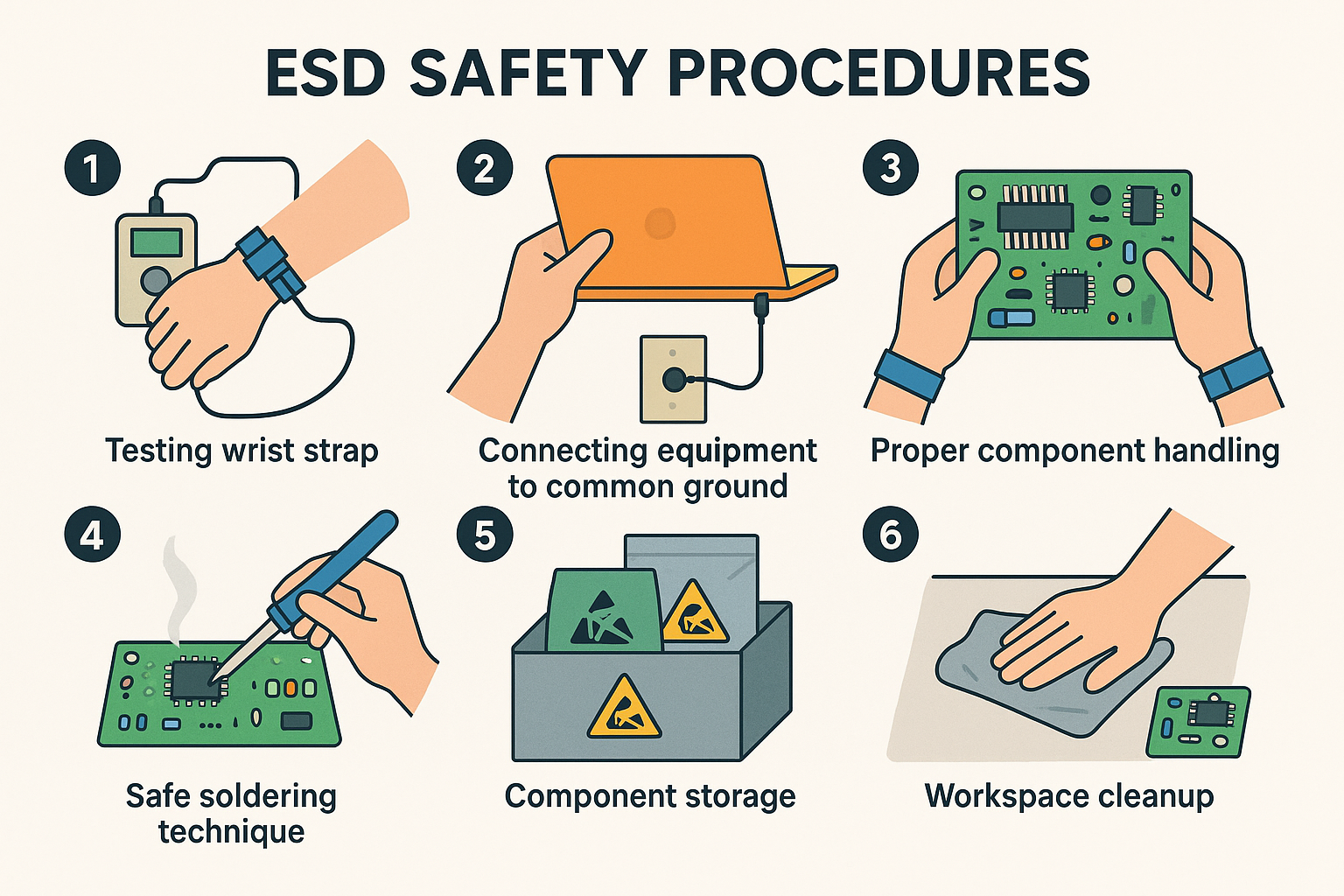
- Verify all connections: Check that your XYTRONIC station, wrist strap, and mat are properly grounded
- Test equipment: Use an ESD tester to verify wrist strap and mat functionality
- Organize workspace: Remove unnecessary items that could generate static
- Check humidity: Maintain 40-60% relative humidity when possible
During Soldering Operations
Handle Components Properly: Always pick up components by their bodies, not leads. Store them in anti-static containers until needed.
Maintain Contact: Keep yourself grounded throughout the entire process. If you need to leave the workstation, ground yourself again when returning.
Use Proper Technique: When choosing tips for your XYTRONIC station, consider ESD implications. Larger tips provide better grounding contact.
After Completion
- Discharge any stored energy in capacitors before handling
- Store components properly in anti-static packaging
- Clean workspace with ESD-safe cleaning materials
- Document any ESD events for future reference
Advanced ESD Protection Strategies
Environmental Controls 🌡️
Humidity Management: Low humidity increases static generation. Use humidifiers to maintain optimal levels, especially in winter months.
Flooring Considerations: ESD-safe flooring or foot straps provide additional grounding paths when moving around the workspace.
Clothing Choices: Avoid synthetic materials that generate static. Cotton and ESD-safe garments work best.
Testing and Monitoring
Regular testing ensures your ESD protection remains effective:
- Daily wrist strap testing before starting work
- Weekly mat resistance verification
- Monthly complete system testing
- Annual professional calibration
Common ESD Safety Mistakes to Avoid
The “It Won’t Happen to Me” Mentality ❌
Many experienced technicians become complacent about ESD safety. Remember that ESD damage is often invisible and cumulative.
Incomplete Grounding Systems
Using only a wrist strap without a proper mat, or grounding equipment to different points, creates potential differences that can actually increase ESD risk.
Ignoring Environmental Factors
Working in low humidity, wearing synthetic clothing, or using non-ESD-safe cleaning products can negate even the best equipment protection.
Troubleshooting ESD Protection Issues
When Components Still Fail
If you’re experiencing component failures despite following ESD procedures:
- Verify ground integrity using a multimeter
- Check for intermittent connections in wrist straps and mats
- Test all equipment resistance values
- Review handling procedures for gaps in protection
Equipment Maintenance
Keep your ESD protection equipment in top condition:
- Replace wrist strap cords showing wear or damage
- Clean mat surfaces regularly with ESD-safe cleaners
- Inspect connections for corrosion or looseness
- Calibrate test equipment annually
Ready to upgrade your soldering setup with proper ESD protection? Shop XYTRONIC soldering stations and ensure your projects stay safe from electrostatic damage.
Building an ESD-Safe Culture
Training and Education 📚
Whether you’re working alone or with a team, consistent ESD safety practices require ongoing education. For comprehensive guidance on safe soldering practices, check out our beginner’s guide to soldering safety and ESD basics.
Documentation and Procedures
Develop written procedures for:
- Daily equipment checks
- Proper component handling
- Incident reporting
- Equipment maintenance schedules
The Cost of ESD Damage vs. Prevention
Financial Impact 💰
Consider these real costs:
Component Replacement: Modern microprocessors can cost hundreds of dollars each
Rework Time: Diagnosing and fixing ESD damage takes valuable time
Reputation Risk: Failed products due to ESD damage hurt professional credibility
Prevention Investment: Complete ESD workstation setup costs less than replacing a few damaged components
Return on Investment
A properly equipped ESD-safe workstation typically pays for itself within the first few months of use, especially when working with sensitive modern components.
Future-Proofing Your ESD Safety
Evolving Component Sensitivity
As electronics continue to miniaturize, components become increasingly sensitive to ESD. Voltages that were safe ten years ago can now cause damage. Your ESD safety procedures must evolve with technology.
New Protection Technologies
Stay informed about advancing ESD protection technologies:
- Smart monitoring systems that alert you to ESD events
- Advanced materials with better protection characteristics
- Integrated protection in new tool designs
Industry Standards and Compliance
Key Standards to Follow 📏
ANSI/ESD S20.20: The primary standard for ESD control programs
IEC 61340: International electrostatic discharge standards
JEDEC Standards: Specific requirements for semiconductor handling
Certification Benefits
Following recognized standards provides:
- Consistent protection levels
- Industry credibility
- Insurance and liability protection
- Customer confidence
For more insights and updates on soldering safety and techniques, visit our blog regularly.
Conclusion
ESD safety on XYTRONIC stations represents a critical foundation for successful electronics work in 2025 and beyond. While XYTRONIC stations provide excellent built-in protection features including grounded tips and chassis grounding, they’re most effective as part of a complete ESD protection system.
The key to successful ESD safety lies in understanding both what’s protected and what requires additional measures. Your XYTRONIC station protects the immediate soldering area, but your body, tools, and workspace need separate grounding and protection strategies.
Take action today by auditing your current ESD safety setup. Verify that all equipment is properly grounded, test your protection devices, and ensure your procedures cover every aspect of component handling. Remember, the small investment in proper ESD protection equipment and procedures will save you significant time, money, and frustration in the long run.
The electronics industry continues to push toward smaller, more sensitive components. By establishing robust ESD safety practices now with your XYTRONIC station, you’re not just protecting today’s projects—you’re preparing for tomorrow’s even more sensitive technologies.