
Picture this: You’re deep into a complex circuit board repair, components scattered across your workbench, when your soldering iron takes what feels like an eternity to heat up. Then, just as you’re making progress, the temperature drops with each joint, forcing you to wait between connections. Sound familiar? If you’ve ever found yourself tapping your fingers impatiently while waiting for your soldering equipment to catch up with your workflow, you’re not alone. The difference between a standard soldering station and one with rapid heat-up and recovery capabilities isn’t just about convenience—it’s about transforming your entire approach to electronics work.
Key Takeaways
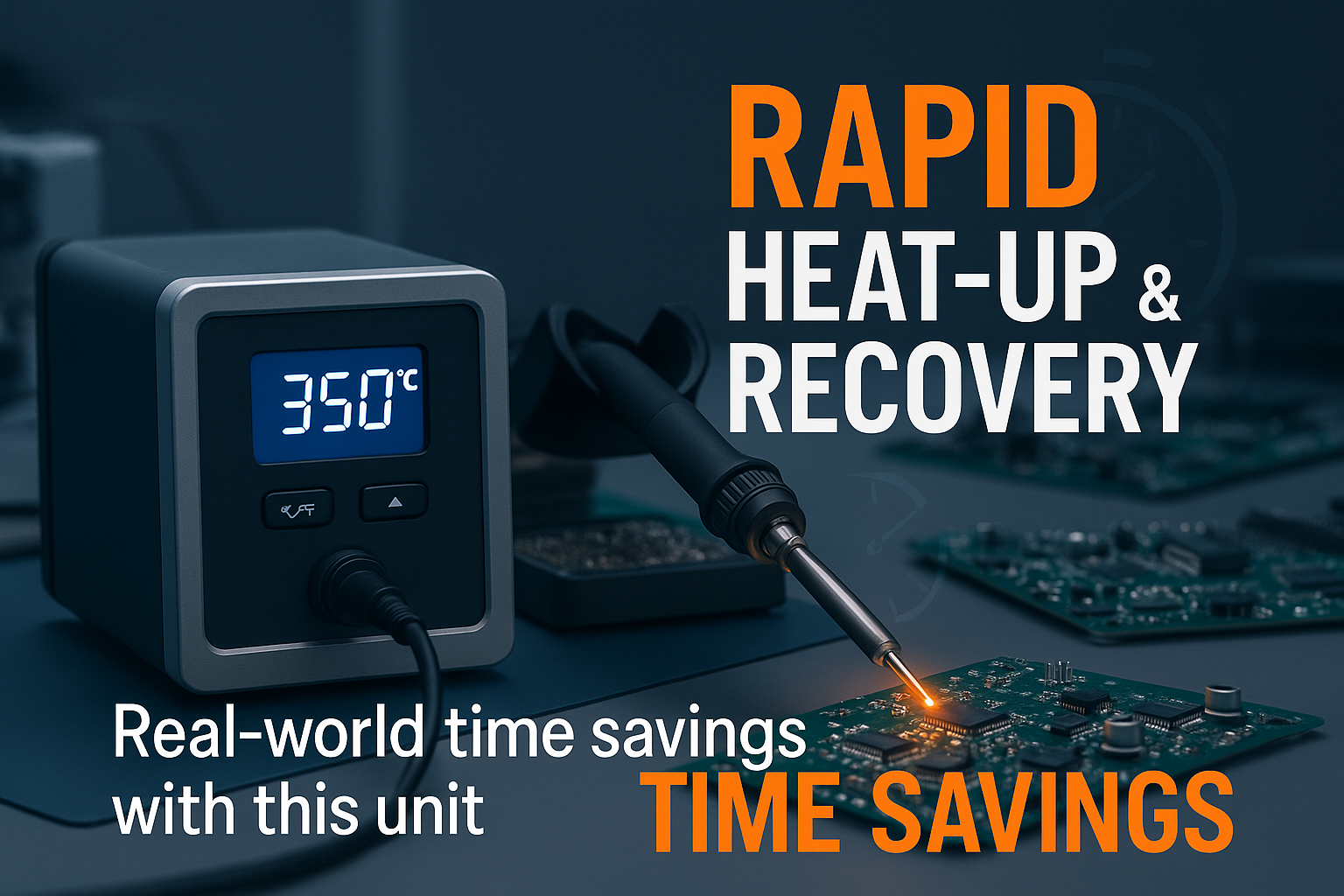
• Rapid heat-up technology can reduce initial warming time from 5-10 minutes to under 60 seconds, dramatically improving workflow efficiency
• Advanced temperature recovery maintains consistent heat during continuous soldering, preventing cold joints and rework
• Real-world time savings can amount to 2-3 hours per week for active electronics professionals and hobbyists
• Modern soldering stations with rapid recovery features significantly reduce project completion times and improve joint quality
• Investment in rapid heat-up technology pays for itself through increased productivity and reduced frustration
Understanding Rapid Heat-Up Technology ⚡
When we talk about rapid heat-up and recovery, we’re discussing two critical performance metrics that separate professional-grade soldering stations from basic models. Heat-up time refers to how quickly your iron reaches working temperature from a cold start, while recovery time measures how fast the unit regains temperature after thermal load—like soldering a large ground plane or multiple joints in succession.
Traditional soldering irons can take anywhere from 5 to 10 minutes to reach optimal working temperature. During this time, you’re essentially idle, unable to begin your actual work. Modern rapid heat-up systems, however, can achieve working temperature in 30 to 90 seconds, representing a dramatic improvement in workflow efficiency.
The Science Behind Fast Recovery
Recovery performance becomes crucial during active soldering sessions. Every time you make a joint, especially on thermally demanding components like large capacitors or ground planes, your iron loses heat. Standard irons may take 15-30 seconds to recover between joints, while advanced systems maintain temperature stability within 2-5 seconds.
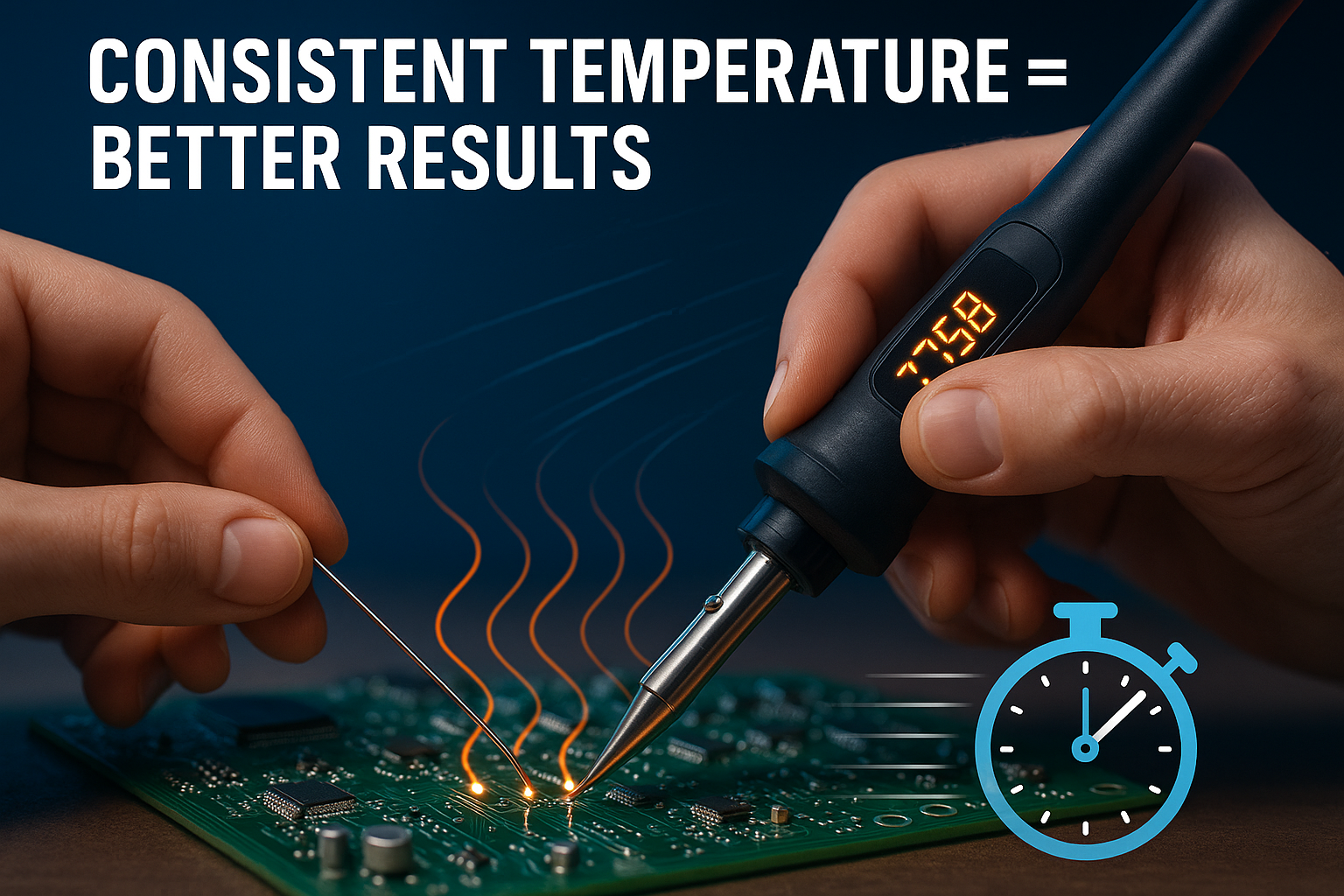
This difference isn’t just about speed—it’s about joint quality. When your iron can’t maintain consistent temperature, you risk creating cold solder joints, which can lead to circuit failures and require time-consuming rework.
Real-World Time Savings Analysis 📊
Let me break down the actual time savings you can expect with rapid heat-up and recovery technology based on typical usage patterns:
Daily Workflow Impact
Morning Startup:
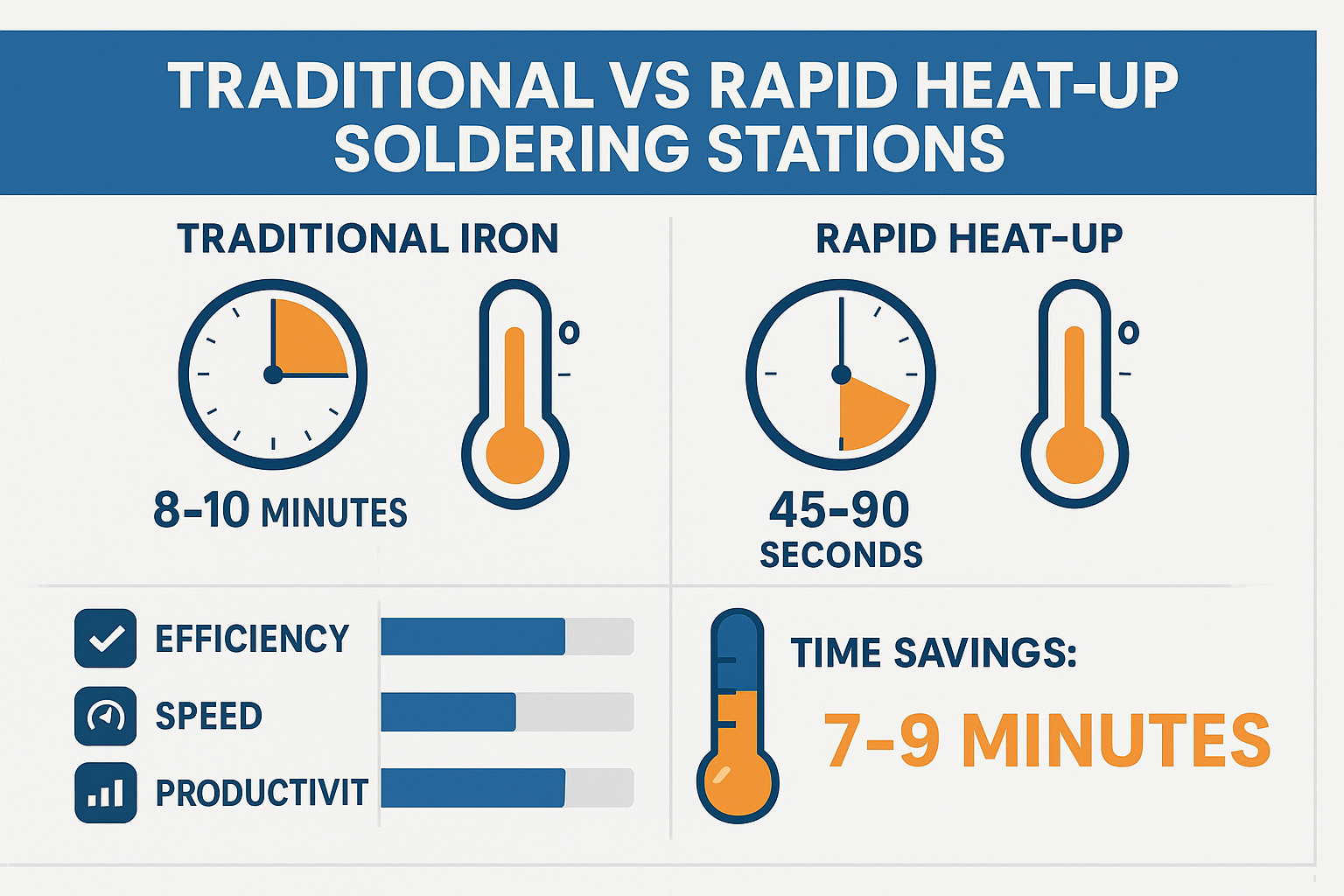
- Traditional iron: 8-10 minutes to working temperature
- Rapid heat-up unit: 45-90 seconds
- Daily savings: 7-9 minutes
Multiple Session Days:
Many engineers and hobbyists work in multiple sessions throughout the day. If you power down your iron for safety during breaks and restart it 3-4 times daily:
- Traditional approach: 30-40 minutes total wait time
- Rapid heat-up approach: 3-6 minutes total wait time
- Daily savings: 27-34 minutes
Project-Level Time Savings
For a typical weekend electronics project involving 50-75 solder joints:
Without Rapid Recovery:
- Average wait between thermally demanding joints: 20 seconds
- Total waiting time: 15-25 minutes
- Project completion: 3-4 hours
With Rapid Recovery:
- Average wait between joints: 3-5 seconds
- Total waiting time: 2-4 minutes
- Project completion: 2.5-3 hours
- Project savings: 30-60 minutes
Performance Comparison: Standard vs. Rapid Systems
| Feature | Standard Iron | Rapid Heat-Up Unit | Time Difference |
|———|—————|——————-|—————–|
| Cold start to 350°C | 8-10 minutes | 45-90 seconds | 7-9 minutes saved |
| Recovery after large joint | 15-30 seconds | 2-5 seconds | 10-25 seconds saved |
| Temperature stability | ±15-20°C | ±2-5°C | Better consistency |
| Ready-to-work indicator | Often none | LED/display | Eliminates guesswork |
The Professional Impact 💼
For electronics professionals, these time savings translate directly into increased productivity and reduced project costs. Consider a service technician who performs 5-8 repairs daily. The cumulative time savings from rapid heat-up and recovery can amount to 1-2 additional billable hours per day.
Cost-Benefit Analysis
Weekly Time Savings for Active Users:
- Daily startup savings: 35-45 minutes/week
- Session restart savings: 2-3 hours/week
- Improved workflow efficiency: 1-2 hours/week
- Total weekly savings: 4-6 hours
For a professional billing at $75/hour, this represents $300-450 in additional weekly capacity. Even for hobbyists, the reduced frustration and increased project completion rate provides significant value.
Technical Features That Enable Speed ⚙️
Understanding what makes rapid heat-up and recovery possible helps you make informed decisions when selecting equipment:
Advanced Heating Elements
Modern rapid heat-up systems typically use ceramic or composite heating elements with higher power density than traditional resistive coils. These elements can deliver 60-100 watts to the tip efficiently, compared to 25-40 watts in standard irons.
Intelligent Temperature Control
Microprocessor-controlled systems monitor tip temperature hundreds of times per second, making real-time adjustments to maintain precise temperature. This rapid feedback loop is essential for both quick heat-up and fast recovery.
Optimized Thermal Design
The thermal pathway from heating element to tip is carefully engineered to minimize heat loss and maximize transfer efficiency. This includes specialized tip designs and improved thermal coupling between components.
Choosing the Right Rapid Heat-Up System 🎯
When evaluating rapid heat-up soldering stations, consider these key factors:
Power and Performance Specifications
Look for stations offering 60-100 watts of power with temperature ranges appropriate for your work. Most electronics work requires 200-400°C capability with rapid adjustment between temperatures.
Temperature Display and Control
Digital displays with precise temperature readouts and quick-set controls allow you to optimize settings for different components and materials efficiently.
Tip Compatibility and Selection
A wide range of compatible tips ensures you can handle various joint sizes and component types without compromising performance. Learn more about choosing the right tips for your station to maximize your rapid heat-up investment.
Ready to experience the productivity boost of rapid heat-up technology? Shop XYTRONIC soldering stations and discover how the right equipment can transform your electronics workflow.
Safety Considerations with Rapid Systems 🛡️
While rapid heat-up technology offers significant advantages, it also requires attention to safety protocols:
Enhanced Safety Features
Modern rapid heat-up stations include auto-sleep functions that reduce temperature during idle periods and automatic shutdown features for extended inactivity. These features protect both your equipment and workspace.
Proper Handling Protocols
The speed of these systems means your iron reaches dangerous temperatures quickly. Always ensure your safety and ESD protocols are in place before powering up your station.
Workspace Preparation
With rapid heat-up capability, you can begin work almost immediately after powering on. This efficiency requires having your workspace organized and ready, as there’s less “warm-up time” to prepare materials and components.
Maximizing Your Time Savings 📈
To fully realize the benefits of rapid heat-up and recovery technology:
Workflow Optimization
Pre-plan your soldering sequence to take advantage of consistent temperature availability. Group similar joints together and work systematically to maintain momentum.
Temperature Management
Use preset temperature controls for different component types. Quick temperature changes between presets eliminate manual adjustment time and ensure optimal results for each joint type.
Maintenance for Peak Performance
Regular tip cleaning and proper storage maintain rapid heat-up performance. A well-maintained rapid system continues delivering time savings throughout its service life.
Future Developments in Rapid Technology 🔮
The evolution of rapid heat-up and recovery technology continues advancing:
Smart Integration
Emerging systems feature smartphone connectivity for remote monitoring and control, allowing you to pre-heat your station before arriving at your workspace.
Adaptive Learning
Advanced controllers are beginning to incorporate usage pattern learning, automatically optimizing heat-up sequences based on your typical workflow patterns.
Enhanced Efficiency
New heating element technologies promise even faster heat-up times while reducing power consumption, making rapid systems more environmentally friendly.
Measuring Your Personal ROI 📊
To quantify the value of rapid heat-up technology for your specific situation:
Track Current Wait Times
Monitor your existing workflow for one week, noting startup times, recovery delays, and project completion times. This baseline helps you calculate potential savings.
Calculate Opportunity Cost
Consider what you could accomplish with the time currently spent waiting for your iron. Whether it’s additional projects, learning new techniques, or simply reducing frustration, assign a value to these benefits.
Factor in Quality Improvements
Consistent temperature control reduces rework time and improves first-pass success rates. Include these quality benefits in your ROI calculation.
Integration with Modern Workflows 🔄
Rapid heat-up and recovery technology aligns perfectly with modern electronics development practices:
Agile Prototyping
Quick iteration cycles benefit enormously from elimination of thermal delays. You can move seamlessly between design, assembly, testing, and modification phases.
Educational Environments
In classroom and workshop settings, rapid heat-up systems maximize actual hands-on time versus waiting time, improving the learning experience and allowing more practice within limited time slots.
Production Support
For low-volume production and rework operations, rapid systems enable flexible scheduling and quick response to urgent requirements.
Conclusion
Rapid heat-up and recovery technology represents a fundamental shift in soldering efficiency, transforming what was once a patience-testing process into a seamless workflow component. The real-world time savings—ranging from 4-6 hours weekly for active users—extend far beyond simple convenience.
These systems deliver measurable productivity improvements through faster startup times, consistent temperature maintenance, and reduced project completion times. For professionals, this translates directly into increased billable capacity and improved service delivery. For hobbyists, it means more time spent on actual creation and learning rather than waiting for equipment.
The investment in rapid heat-up technology pays dividends through improved work quality, reduced frustration, and enhanced project outcomes. As electronics continue becoming more complex and time-to-market pressures increase, having equipment that keeps pace with your creativity and skill becomes essential.
Your next step? Evaluate your current workflow, calculate your time losses, and consider how rapid heat-up and recovery technology could transform your electronics work. The difference between waiting for your tools and having them ready when inspiration strikes can be the difference between good work and exceptional results.
Whether you’re troubleshooting complex circuits, building innovative prototypes, or teaching the next generation of engineers, rapid heat-up and recovery technology ensures your soldering station enhances rather than hinders your capabilities. Visit our comprehensive blog for more insights on optimizing your electronics workflow and discover what makes XYTRONIC stations different in delivering the rapid performance that transforms your work experience.